
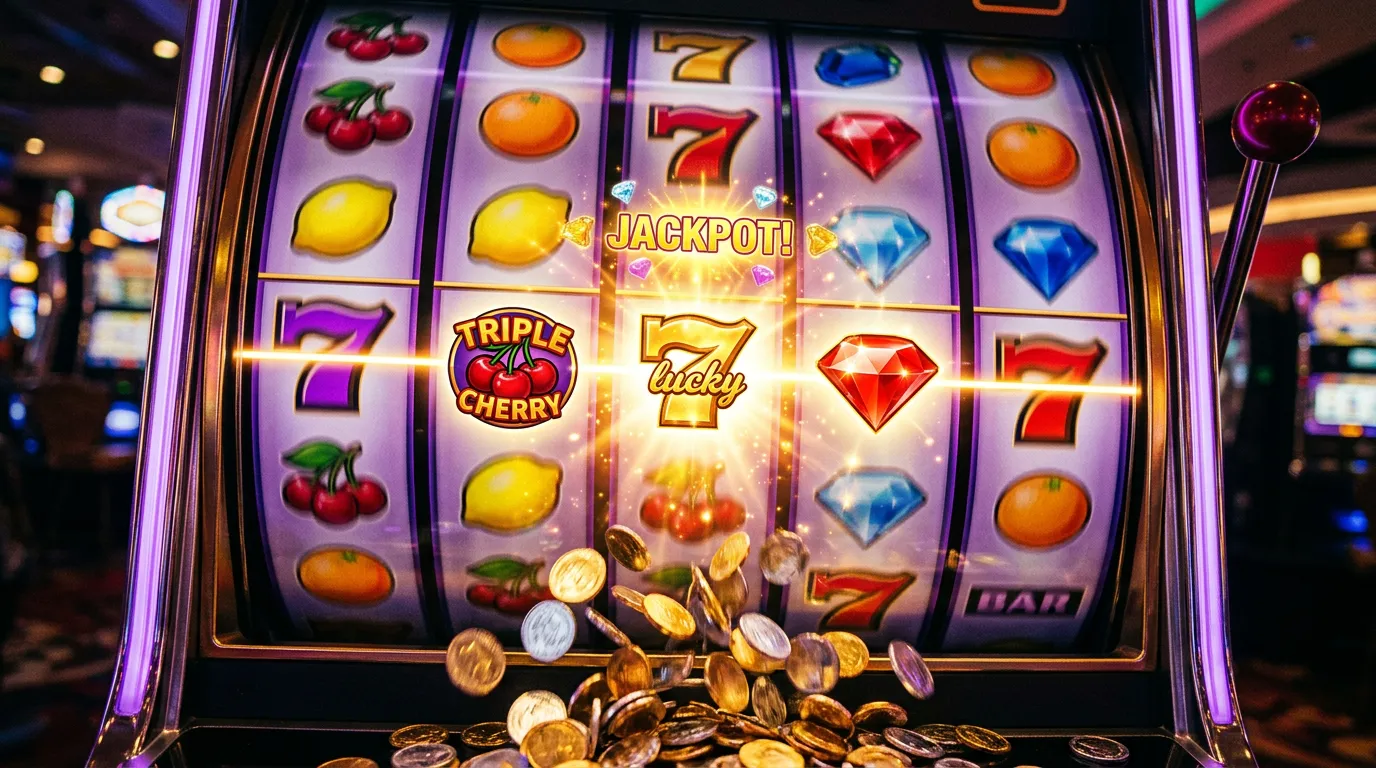
Slots dominate sweepstakes casino play. While table games and specialty titles fill out game libraries, the overwhelming majority of player engagement at sweepstakes platforms centers on spinning reels. This reflects broader gambling industry patterns — slots generate the majority of revenue at traditional casinos too, and sweepstakes platforms are no different.
The appeal is straightforward. Slots require no strategy decisions during play. You choose your bet size, press spin, and watch results unfold. The simplicity makes them accessible to everyone regardless of gambling experience. The visual and audio stimulation creates engaging entertainment even during losing sessions. But beneath that simplicity lies variance, return rates, and game selection decisions that meaningfully affect your outcomes over time.
Playing slots thoughtfully doesn’t mean abandoning fun for spreadsheets. It means understanding which games stretch your coins further, which volatility levels match your play style, and which features create genuine value versus flashy distractions. Learning to spin smarter doesn’t guarantee wins — these are still games of chance where the house holds a mathematical edge — but it positions you to maximize enjoyment and longevity from whatever balance you’re playing with.
Understanding Slot RTP at Sweepstakes Casinos
RTP — Return to Player — measures the theoretical percentage of wagered coins that a slot returns to players over time. An RTP of 96% means that, over millions of spins, the game returns $96 for every $100 wagered. The remaining 4% represents the house edge that makes the business profitable.
Sweepstakes casino slots typically run RTP ranges between 95% and 99%, comparable to regulated online casinos. Higher RTP means lower house edge, which translates to longer average play sessions on the same bankroll. A slot with 98% RTP will, statistically, preserve your balance better than one running at 94%.
Here’s the critical caveat: unlike regulated casinos, sweepstakes platforms face no mandatory RTP disclosure or verification requirements. They can claim any RTP they want without third-party auditing to confirm it. Reputable platforms use games from established providers whose RTP is documented, but the absence of regulatory oversight means you’re trusting platform honesty rather than verified compliance.
Volatility matters as much as RTP. Low-volatility slots pay smaller amounts more frequently. High-volatility slots pay larger amounts less often. Same RTP, different experience. If you’re playing with limited coins and want extended sessions, low-volatility preserves balance better. If you’re chasing big wins and can accept dry spells, high-volatility creates that possibility.
Game providers like Pragmatic Play, NetEnt, and Relax Gaming publish RTP data for their titles. When playing branded games from these providers at sweepstakes casinos, the documented RTP should apply — the same game running on the same software delivers the same return rates. Original games exclusive to specific platforms lack this external documentation — you’re relying entirely on platform claims for those titles without independent verification.
The practical implication: when possible, choose slots from established providers with documented RTP rather than platform-exclusive titles with unverifiable claims. You sacrifice some variety for increased transparency about what you’re actually playing.
Top Slots Worth Playing
Game selection varies between platforms, but certain titles appear consistently across sweepstakes casinos and offer documented favorable characteristics.
From Pragmatic Play, titles like Gates of Olympus and Sweet Bonanza deliver high-volatility experiences with documented RTP around 96.5%. These games feature cascading reels and multiplier mechanics that can generate significant wins during bonus rounds. Big Bass Bonanza and its variants offer medium volatility with engaging fishing-themed bonus features.
The regulated gaming industry has established trust through oversight and transparency. As Howard Glaser, Global Head of Government Affairs at Light & Wonder, noted at the NCLGS conference: “The regulated gaming industry invests heavily in all of these areas, and pursuing growth in gaming is very important, but doing it responsibly has to come along with that.” This perspective highlights why playing games from regulated-market providers at sweepstakes casinos offers more certainty than platform-exclusive titles.
NetEnt classics like Starburst and Gonzo’s Quest appear on many sweepstakes platforms. These games have documented RTP above 96% and proven track records across regulated markets. Their presence indicates platforms licensing legitimate provider content rather than creating unverified proprietary games.
Jackpot slots offer large potential payouts but typically run lower base RTP since a percentage of each wager feeds the progressive prize pool. If you’re playing for extended sessions rather than jackpot chasing, standard slots usually offer better value. If the dream of a life-changing win motivates your play, progressive jackpots provide that possibility.
When exploring new games, check if the provider is identifiable and reputable. Unknown providers or platform-branded exclusives lack the external verification that established providers offer through their regulated market presence.
Strategic Approaches to Slot Play
Slots are fundamentally random — no strategy changes the mathematical outcome of any spin. But how you approach slot play affects your experience significantly.
Bet sizing relative to bankroll determines session length. Betting 1% of your balance per spin creates roughly 100 spins of runway before depletion assuming no wins. Betting 5% per spin shortens that dramatically. Smaller relative bets extend play time; larger bets create more variance with potential for bigger swings in both directions.
Match volatility to goals. If you’re trying to meet playthrough requirements for redemption, low-volatility games with frequent small wins help maintain balance while accumulating qualified wagers. If you’re playing for entertainment and have tolerance for loss, high-volatility games deliver more exciting sessions even if outcomes average out similarly.
Autoplay features exist but consider using manual spins. Automated play accelerates through coins quickly, often faster than you’d play manually. Slowing down extends session time and gives you more conscious engagement with the experience. If you’re playing for entertainment rather than trying to process wagers quickly, manual control usually serves that goal better.
Know when to walk away. Set mental thresholds before playing: a win amount at which you’ll stop, a loss amount at which you’ll stop, or a time limit. Chasing losses rarely ends well, and the euphoria of winning can lead to giving it all back. Predetermined stopping points help maintain control over sessions.
Don’t believe in patterns. Slots use random number generators — each spin is independent of previous outcomes. The game isn’t “due” for a win after a losing streak, and a winning streak doesn’t mean more wins are coming. Treat each spin as the isolated random event it actually is.
Spin Smarter
Slots will always involve luck — that’s the nature of random games. But informed play improves your experience without pretending to change mathematical realities. Choose games with documented RTP from reputable providers. Match volatility to your goals and risk tolerance. Size bets appropriately for your balance and intended session length.
The goal isn’t to beat slots — they’re designed so the house wins over time. The goal is to enjoy the experience while managing your play sensibly. Understanding how these games actually work helps you do exactly that, extracting maximum entertainment from whatever you’re playing with while avoiding the common mistakes that drain balances faster than necessary.
Spinning smarter means approaching play with realistic expectations and informed choices. It means recognizing what you can control (game selection, bet sizing, session limits) and what you can’t (individual spin outcomes). Master the former, accept the latter, and slots become sustainable entertainment rather than frustrating randomness.
Sweepstakes Casino Slots — More on this topic at sc casino free play.
See also Sweepstakes Casino Table Games.