The moment you decide to redeem your Sweeps Coins for actual prizes, a process kicks in that separates sweepstakes casinos from the purely social gaming world. It’s called KYC—Know Your Customer—and completing it successfully determines whether your accumulated virtual currency converts to real money or sits in your account indefinitely.
Identity verification exists for reasons that benefit both platforms and players, though it rarely feels that way when you’re uploading photos of your driver’s license at 11pm. Sweepstakes casinos operate under promotional sweepstakes law, which requires operators to confirm participant eligibility—age, identity, and location—before distributing prizes. Without verification, platforms risk regulatory scrutiny that could shut down operations entirely.
The industry’s rapid growth makes this more relevant than ever. More than 140 sweepstakes casino platforms currently operate in the United States, according to Eilers & Krejcik Gaming data reported by iGaming Business, and the competitive pressure has accelerated both player acquisition and regulatory attention. Verifying player identity helps legitimate operators distinguish themselves from less scrupulous competitors.
“The lack of regulatory oversight presents many risks for consumers as well as the integrity and economic benefits of the legal gaming market through investment and tax contributions. These sweepstakes-based operators have weak (if any) responsible gaming protocols and few, if any, self-exclusion processes.” — American Gaming Association Policy Statement
This critique from traditional gambling’s trade group underscores why verification matters: it represents one of the few standardized compliance practices across the sweepstakes industry. Platforms that implement thorough KYC demonstrate operational maturity that protects players from fraud while ensuring legitimate winners receive their prizes.
Understanding the verification process before you start playing saves frustration later. The requirements vary slightly between platforms, but the core elements remain consistent: government-issued identification, proof of address, and sometimes partial Social Security Number confirmation. Some casinos verify identity automatically using database checks during registration, while others require manual document submission only when you request your first redemption.
This guide breaks down the entire process—from initial account creation through document submission, processing times, and common rejection reasons. Verify once, play freely afterward. That’s the goal, and knowing what to expect makes achieving it straightforward.
Step-by-Step Registration
Creating a sweepstakes casino account takes about five minutes if you have your information ready. The process mirrors standard online account creation with a few gambling-specific additions designed to establish your eligibility from the start.
Begin by navigating to your chosen platform’s registration page. You’ll typically find a prominent “Sign Up” or “Join Now” button on the homepage. Clicking this initiates a form sequence that collects your basic information in stages rather than presenting everything at once.
The first stage captures your email address and password. Choose an email you check regularly—platforms send verification links, promotional offers, and security alerts to this address. Your password should follow standard security practices: at least eight characters with a mix of letters, numbers, and symbols. Some platforms enforce specific requirements, while others accept any reasonably strong password.
After submitting your email, expect an immediate verification message in your inbox. Click the confirmation link within the timeframe specified—usually 24 to 48 hours—to activate your account. Check your spam folder if the email doesn’t appear within a few minutes; gambling-related messages sometimes get filtered by aggressive email services.
The second stage asks for your legal name exactly as it appears on your government-issued identification. This matters more than you might expect. A mismatch between your registration name and your ID causes verification delays later. If your driver’s license says “William” but you entered “Bill” during registration, the automated verification system flags the discrepancy. Use your full legal name from the start.
Date of birth comes next, with the minimum age set at 18 for most sweepstakes casinos. Some platforms in certain states require users to be 21—the same threshold as traditional casinos. Enter your actual birth date; false information invalidates your account and forfeits any accumulated balance.
Your residential address must fall within a state where the platform operates. This is where geographic restrictions enter the equation. Seventeen states have banned or restricted sweepstakes casinos as of 2026, according to Lines.com’s state legality tracking. If you live in Washington, Idaho, Nevada, or another restricted state, the registration process typically blocks account creation based on your address or blocks you from accessing the site based on IP detection.
Phone number verification adds another layer of identity confirmation. Most platforms send an SMS code that you enter to confirm device ownership. This also establishes a communication channel for security alerts—unusual login attempts, redemption confirmations, and account recovery.
Some platforms include a state dropdown menu that filters available features based on local regulations. Others use IP geolocation to detect your approximate location automatically. Either way, accessing a sweepstakes casino from a restricted state—whether through VPN or travel—typically violates terms of service and risks account termination.
Once you complete these steps, your account enters an active status with basic playing privileges. You can claim welcome bonuses, explore games, and accumulate Sweeps Coins. Full KYC verification—the document submission process—becomes mandatory only when you request your first prize redemption.
Required Documents for KYC
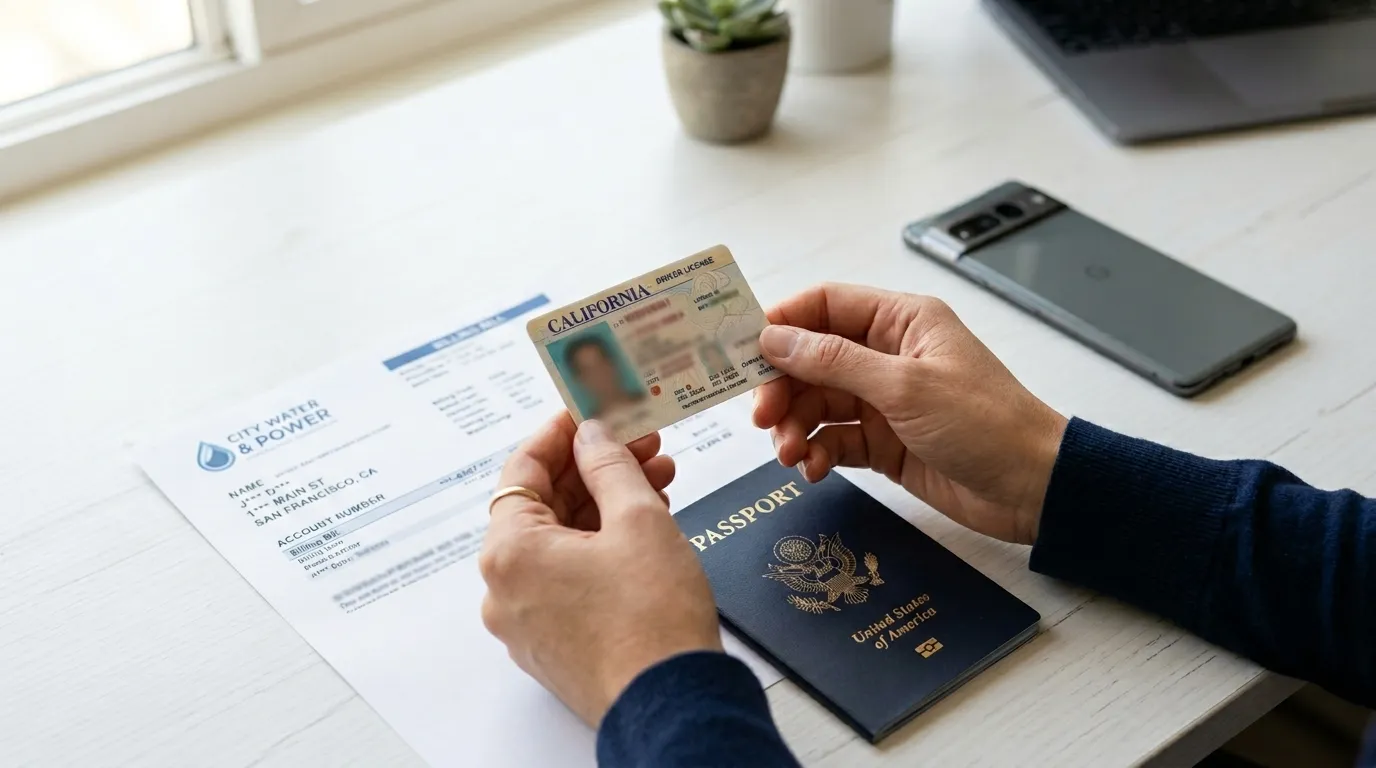
When you submit your first redemption request, the platform initiates KYC review and asks you to provide documentation proving you are who you claimed to be during registration. The exact requirements vary slightly between casinos, but three categories cover nearly every platform: government-issued photo ID, proof of current address, and in some cases, partial Social Security Number verification.
Government-issued photo identification serves as the primary verification document. Acceptable forms include a state driver’s license, state-issued ID card, US passport, or US passport card. The document must be current—expired identification fails verification regardless of how recent the expiration date. International documents like foreign passports may work for some platforms, but US-issued identification streamlines the process.
Photo quality matters more than you might expect. The verification team—whether human or automated—needs to read every piece of information on your ID clearly. Shoot your document on a flat surface with even lighting, avoiding shadows and glare. Capture the entire card within the frame without cropping corners or edges. Blurry images, partial captures, and photos with fingers visible over text all trigger rejection requests.
Front and back images are typically required for driver’s licenses and state IDs. Passports only need the photo page. Some platforms accept photos taken directly through their mobile app’s camera function, which often includes positioning guides and quality checks before submission. Others allow uploading images from your device’s photo library.
Proof of address confirms that you live where you said you live during registration. Utility bills, bank statements, credit card statements, and government correspondence all qualify, provided they’re recent (usually within 90 days) and clearly display your full name and current address. The document must match the information in your account profile.
Digital statements work as well as paper ones. Download a PDF from your utility company’s website or bank portal and submit that. Screenshots of online account dashboards generally don’t qualify because they’re too easily edited. The verification team wants official documents with letterheads, account numbers, and dates.
P.O. boxes create complications. Most platforms require a residential street address for verification, not a post office box. If your mailing address differs from your residential address, you may need to provide documentation showing both or contact support for guidance on your specific situation.
Social Security Number verification appears on some platforms but not others. When required, you typically provide only the last four digits—not the full number. This allows the platform to run a soft identity check through credit bureaus or identity verification services without requiring you to share highly sensitive information. The check confirms that a real person with your name and demographic information exists, adding another layer of fraud prevention.
File format requirements vary by platform. JPEG and PNG image files work universally. PDF documents often work for address verification. File size limits typically cap at 5MB to 10MB per upload. If your scan or photo exceeds this limit, reduce the resolution or use image compression tools before resubmitting.
Keep your documents accessible in a dedicated folder on your device. Once you’ve completed verification on one platform, you’ll likely use the same documents again when signing up for others. Having clean, properly lit photos of your ID ready saves time when the verification prompt appears.
Some platforms offer expedited verification for players who verify proactively—before their first redemption request. Check your account settings or profile section to see if this option exists. Completing verification during a calm moment beats scrambling to photograph documents when you’re eager to cash out.
Age verification deserves specific mention because it’s non-negotiable. Every sweepstakes casino requires players to be at least 18 years old, with some platforms in certain jurisdictions requiring 21. Your date of birth on your ID must show you meet the minimum age requirement—there are no exceptions. Players under the age threshold cannot verify, cannot redeem, and risk account termination plus forfeiture of any accumulated balance if they misrepresented their age during registration.
Selfie verification has become increasingly common alongside document submission. Some platforms request a live photo of you holding your ID, which confirms both document ownership and prevents the use of stolen identity documents. Follow the specific positioning instructions carefully—typically your face and the ID should both be clearly visible in a single frame. Good lighting remains essential, as shadowy selfies trigger the same rejection issues as poorly photographed documents.
Verification Timeline by Platform
Processing times for KYC verification range from nearly instant to several business days, depending on the platform, the clarity of your submitted documents, and the volume of requests the verification team is handling. Setting realistic expectations helps you plan around potential delays.
Automated verification systems process submissions fastest. These platforms use identity verification APIs that cross-reference your submitted documents against government databases and identity networks in real time. When everything matches—name, address, document authenticity—approval happens within minutes. Platforms investing heavily in technology infrastructure tend to offer this experience.
Manual review queues slow things down. Smaller platforms or those without automated systems route submissions to human reviewers who examine documents individually. During normal business hours, this might take 24 to 48 hours. During promotional periods, holidays, or after major marketing campaigns bring surges of new players, backlogs extend timelines to 72 hours or more.
Chumba Casino, operated by VGW—the largest player in the sweepstakes space—typically processes verification within 24 to 72 hours according to player reports. Their scale means dedicated verification staff but also high submission volumes. The company processed $2.83 billion in player prize payouts during fiscal year 2023-2024 according to financial data reported by SBC Americas, which implies millions of successful verifications supporting those redemptions. First-time redemptions often take longer than subsequent ones since the initial review establishes your verified status for future transactions.
Stake.us generally reports verification windows of one to three business days, with faster processing for straightforward submissions and longer delays when additional documentation is requested. Their crypto-forward approach doesn’t bypass KYC—federal compliance requirements apply regardless of payout method.
Pulsz Casino aims for 48-hour verification turnaround under normal conditions. Player feedback suggests actual times vary based on document quality and current processing volumes. Submitting during off-peak hours—weekday mornings rather than weekend evenings—may reduce wait times simply due to queue positioning.
The sweepstakes industry’s growth trajectory affects these timelines industry-wide. Platforms are acquiring players roughly three times faster than traditional real-money online casinos according to data cited by Snell & Wilmer’s analysis of industry trends. This accelerated growth strains verification infrastructure, particularly at platforms that haven’t scaled their compliance operations proportionally.
Resubmission requests add time to the process. If your initial documents don’t pass review—blurry images, expired ID, address mismatch—you’ll receive a notification explaining the issue and requesting new submissions. This essentially restarts the clock, adding another full review cycle to your timeline. Getting documents right the first time prevents these delays.
Weekends and holidays affect manual review processes. Platforms with human verification teams typically operate on standard business schedules. Submitting documents Friday evening means waiting until Monday at the earliest for review, regardless of advertised turnaround times. Plan accordingly if you’re hoping to receive a payout by a specific date.
Peak seasons create bottlenecks across the industry. Tax refund season in early spring, major sports betting events, and holiday periods all drive increased activity at sweepstakes casinos. More players attempting redemptions means longer queues for everyone. If you’re approaching a threshold during these periods, submit verification documents proactively rather than waiting until you’re ready to cash out.
Account age sometimes influences processing priority. Long-standing players with established activity histories may receive faster review than brand-new accounts requesting immediate redemption. This isn’t universal, but some platforms implement tiered processing to manage risk and reward loyalty simultaneously.
VIP status on some platforms provides dedicated verification support. Higher-tier players may have access to priority processing queues, dedicated account managers, or direct communication channels that bypass standard support tickets. If you’ve achieved elevated status through consistent play, check whether verification benefits come with your tier—they often do.
Common Issues and Troubleshooting
Even careful submissions sometimes hit roadblocks. Understanding the most common rejection reasons—and how to resolve them—turns frustrating delays into minor inconveniences.
Document quality problems top the list of verification failures. Blurry images, poor lighting, glare from flash photography, and partially visible documents all trigger rejection. The fix is straightforward: reshoot your documents in natural daylight or under bright even lighting, ensure the entire document fits within the frame with a small margin on all sides, and hold your camera steady or rest it on a surface. Avoid shadows cast by your hand or phone.
Expired identification requires obtaining a new document before verification can proceed. Most platforms have no flexibility here—an expired ID is an invalid ID regardless of how recently it lapsed. If your license is approaching expiration and you plan to play sweepstakes casinos, renewing early avoids this issue. The replacement process takes days to weeks depending on your state’s DMV, so don’t wait until you’re ready to cash out.
Name mismatches between your registration information and your ID create complications that range from simple to complex. If you entered “Mike” during registration but your license says “Michael,” contact customer support to update your profile before resubmitting documents. Legal name changes from marriage, divorce, or court order require documentation proving the connection between your old and new names—typically a marriage certificate or court order alongside your current ID.
Address discrepancies arise when you’ve moved since registering or when your ID shows a different address than your current residence. Platforms need your actual current address for compliance purposes. Update your profile to reflect your present address, then submit a utility bill or bank statement from that location as proof of residence. Your ID address doesn’t need to match your current address as long as you can prove where you actually live.
State restriction errors appear when players attempt to verify from banned locations. If you registered before your state enacted restrictions, or if you’ve moved from a legal state to a restricted one, your account may become ineligible for redemption regardless of your accumulated balance. Some platforms freeze accounts entirely; others allow continued play without redemption capability. The policies vary, but the underlying issue—geographic ineligibility—has no workaround beyond relocating to a legal jurisdiction.
Document format rejections happen when players submit unsupported file types. Stick to JPEG, PNG, or PDF files under the size limits specified by the platform. Screenshots, HEIC files from iPhones, and unusual formats often fail to upload or process correctly. Convert to standard formats before attempting submission.
Multiple account detection flags verification attempts on secondary accounts. Sweepstakes platforms prohibit multiple accounts per person, and their verification systems cross-reference submitted documents against previous submissions. If you previously verified an account—even one you’ve forgotten about or abandoned—attempting to verify a second account triggers fraud prevention protocols. Contact support if you legitimately need to transfer to a new account; creating duplicate accounts without disclosure violates terms of service.
When standard troubleshooting doesn’t resolve your issue, customer support becomes your escalation path. Document your submission attempts, note any error messages, and provide clear descriptions of the problem when contacting support. Most platforms offer live chat, email support, and sometimes phone support for verification issues. Response times vary, but persistence usually resolves legitimate problems within a few days.
Keeping records of your interactions helps if issues persist. Screenshot your submissions, save email confirmations, and note dates and times of support conversations. This documentation proves useful if you need to escalate beyond front-line support or if disputes arise about your verification status.
From Documents to Dollars
KYC verification represents the bridge between playing for virtual prizes and actually receiving real money from your sweepstakes casino experience. The process exists to protect everyone involved—platforms from fraud and regulatory issues, players from identity theft and scam operations, and the broader industry from the scrutiny that follows poor compliance practices.
The verification process itself follows a predictable pattern once you understand it. Register with accurate information that matches your identification documents. Submit clear, well-lit photos of valid government ID and recent proof of address when prompted. Wait for processing—usually a few hours to a few days depending on the platform and timing. Address any rejection requests by providing cleaner documents or correcting profile information. Once approved, your verified status typically persists indefinitely unless you change addresses or your documents expire.
Completing verification before you need it eliminates the frustrating delay between deciding to cash out and actually receiving your money. Many platforms allow proactive verification through account settings, letting you upload documents at your convenience rather than under the pressure of a pending redemption request.
The sweepstakes industry continues to grow, which means more players, more platforms, and more attention from regulators. KYC processes may tighten over time as operators respond to both competitive pressure and compliance requirements. Players who establish verified accounts now position themselves for smoother experiences as the industry matures.
Verify once, play freely—that’s the goal. The process takes minutes of preparation and days of patience, but once complete, your path to prize redemption stays clear. Future redemption requests process faster since your verified status carries forward, making the initial effort worthwhile for any player serious about converting Sweeps Coins to cash.